Introduction: As the source factory for wooden staircase handrails, Lignomaster compares the durability, cost, and application scenarios of oak, walnut, beech, and teak to assist global engineers and designers in choosing suitable wooden staircase railings for indoor and outdoor projects.
At Lignomaster, we believe that the selection of wood directly determines the lifespan, overall texture, and decoration grade of wooden staircase handrails. For global engineering contractors, interior designers, and real estate developers, choosing the right compatible hardwood is the foundation for the durability of staircase projects. Different woods vary significantly in hardness, stability, and weather resistance, directly affecting the decoration effect and long-term maintenance cost of wooden staircase railings. Many overseas buyers have difficulty distinguishing the differences between mainstream woods, so we have simplified the selection thinking for residential, commercial buildings, and outdoor stairs based on years of factory production experience.
Main Hardwood Characteristics for Staircase Handrails
As a professional manufacturer, we mainly promote four mature woods: oak, walnut, beech, and teak. Each type of wood has its specific applicable scenarios and can be customized for various staircase handrails.
Wooden Handrail for Oak
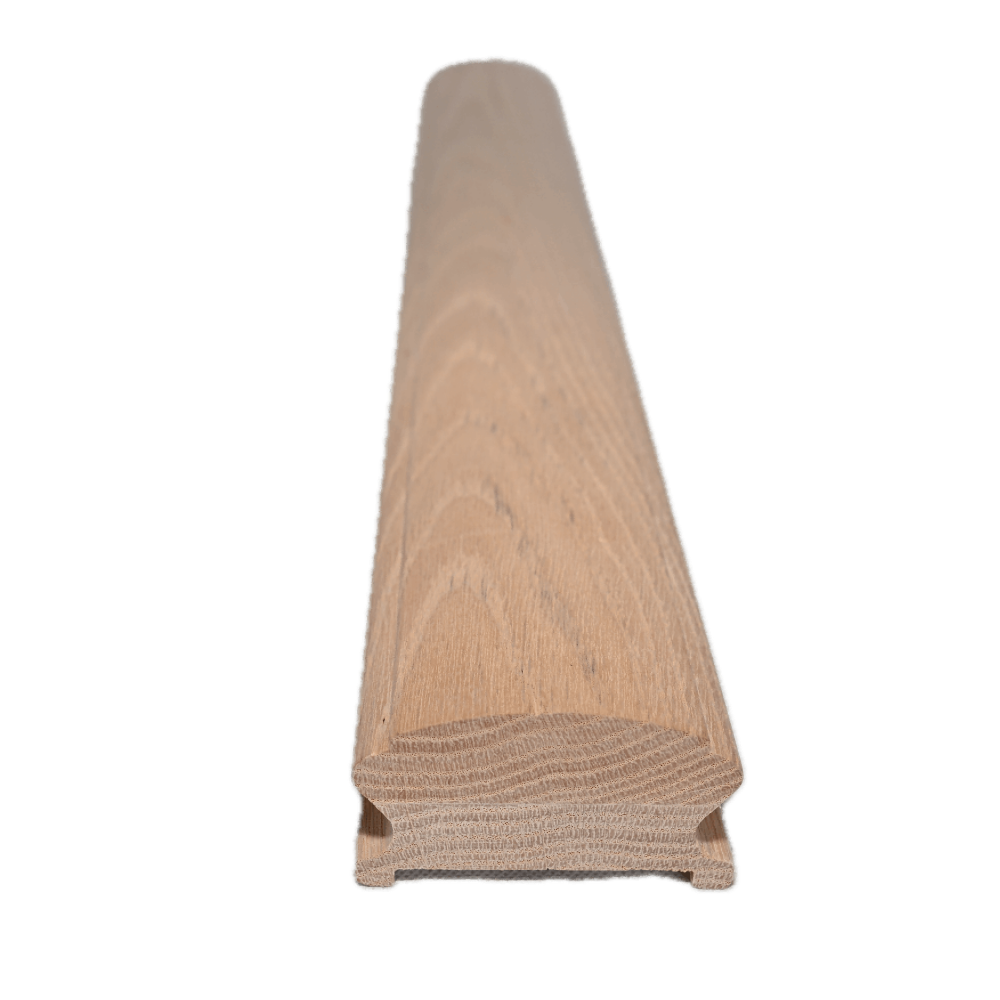
Oak has high hardness, is scratch-resistant and wear-resistant, and has a stable internal structure that is not prone to deformation. This oak wooden staircase handrail is suitable for modern and retro indoor styles and is the most popular choice for residential villas and high-frequency passing indoor stairs, balancing both aesthetics and long-term durability.
Wooden Handrail for Walnut
Walnut has fine and smooth texture, moderate hardness, and excellent anti-cracking performance. The walnut staircase handrail has a low-key and luxurious texture and is widely used in high-end villas, hotels, and commercial buildings in Europe and the Middle East. It is a dedicated wood for high-end decoration.
Wooden Handrail for Beech
Beech has uniform texture and strong toughness, stable supply, and moderate price. Beech is the preferred choice for apartment and commercial building large-scale engineering orders. For contractors with large-scale procurement needs, beech can effectively control procurement costs while presenting a simple and clean interior decoration effect.
Wooden Outdoor Handrail for Teak
Unlike indoor hardwood, teak has natural oils that resist water, UV rays, and fading. Our teak outdoor wooden staircase handrail can withstand rain, high temperatures, and strong sunlight exposure all year round and is the only stable and durable wood for outdoor terraces, courtyards, and open-air corridors.
Selection Criteria for Indoor and Outdoor Staircase Handrails
Preferred Wood for Indoor Staircase Handrails
The indoor temperature and humidity environment is stable, and the focus of selection is on the stability of the wood and the decorative texture. For daily home decoration and industrial construction, beech and oak are the preferred choices. These hardwood staircase handrails rarely crack in indoor environments and enhance the space grade with natural wood grain. If the client pursues high-end decoration effects, walnut is the first choice for high-end residences and commercial spaces.
Selection Points for Outdoor Weather-resistant Staircase Handrails
Common oak, walnut, and beech will mold, crack, and fade over time when placed outdoors. If your project includes outdoor stairs, we only recommend teak as the main material. This durable wooden staircase railing does not need frequent replacement and significantly reduces the hassle of contractors' later maintenance.
Frequently Asked Questions by Customers on Preferred Materials
Q1: Which wood is the most durable for outdoor staircase handrails?
Answer: At Lignomaster, we recommend teak. Its natural waterproof and UV resistance properties allow it to adapt to the complex outdoor environment, and its lifespan is far superior to oak and beech.
Q2: Which wood has strong stability for indoor staircase handrails?
Answer: White oak and beech are the most suitable for indoor projects. They have high hardness and stable wood, reducing daily maintenance costs and being suitable for long-term home use and large-scale construction.
Q3: Can pine be used for regular staircase handrails? Answer: It is not recommended to use pine for commercial and high-end home decoration projects. Pine has a soft texture and poor stability, and is only suitable for temporary, low-cost, and simple temporary renovations.
Q4: Which type of wood has the highest cost-effectiveness for bulk project procurement?
Answer: Elm and white oak balance quality and cost, and are the mainstream materials for apartment and hotel bulk procurement. This makes it convenient for contractors to control the budget and ensures stable final product quality.
Lignomaster Customized Wooden Handrail Design and Supply Service
As a professional supplier of solid wood staircase handrails, we provide a complete set of customized size solid wood staircase handrail services to global distributors and engineers. We offer a variety of wood options, personalized cutting dimensions, and customized surface coating processes. All hardwood staircase handrails are FSC-certified and comply with European and American environmental standards. Whether you need high-end indoor handrails or outdoor weather-resistant handrails, Lignomaster can provide reliable wood supply solutions directly from the factory.